Glass Plate Scanning Service
Glass Plates Digitised At The Highest Possible Quality.
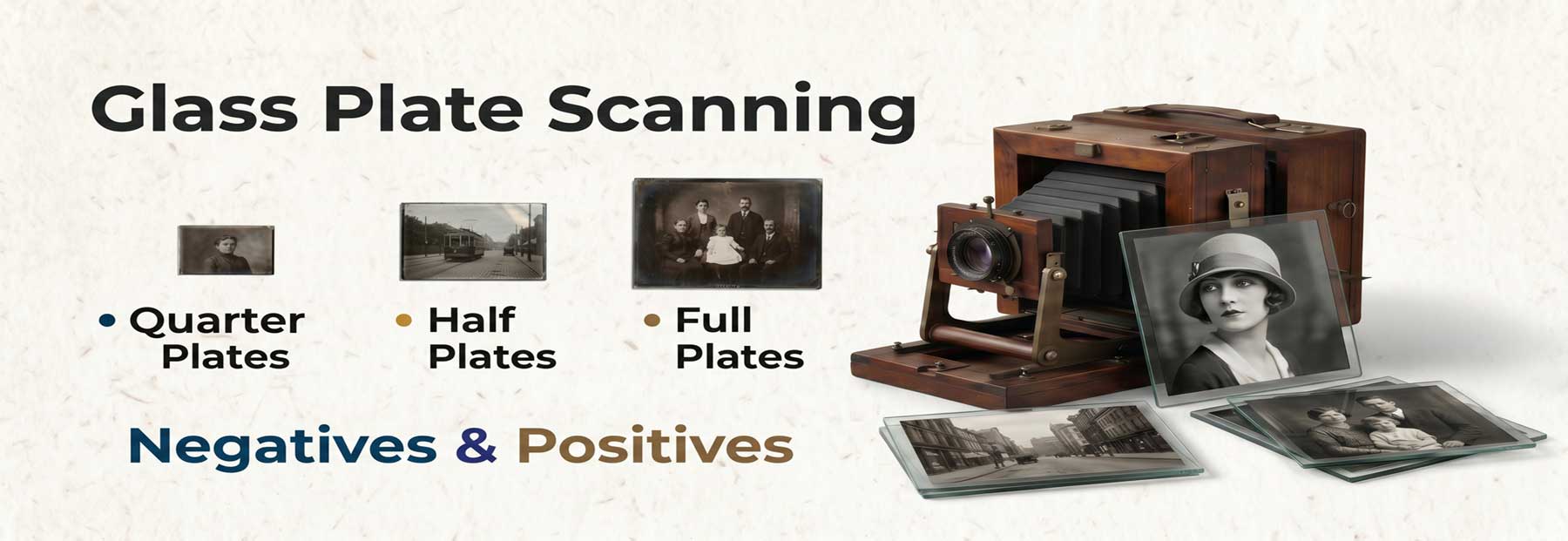
Prices for Glass Plates
Quarter Plates
£1 each
Half Plates
£2 each
Full Plates
£4 each
100 or more plates
Half Price
By using precise alignment, and high‑resolution capture, a good scan preserves fine grain, subtle shadow detail, and the characteristic sharpness of glass‑based photography. It also enables you to store the original plates safely while only needing to work with the digital versions.
These digital versions can be restored, corrected or edited without the need to further handle the delicate glass plates.
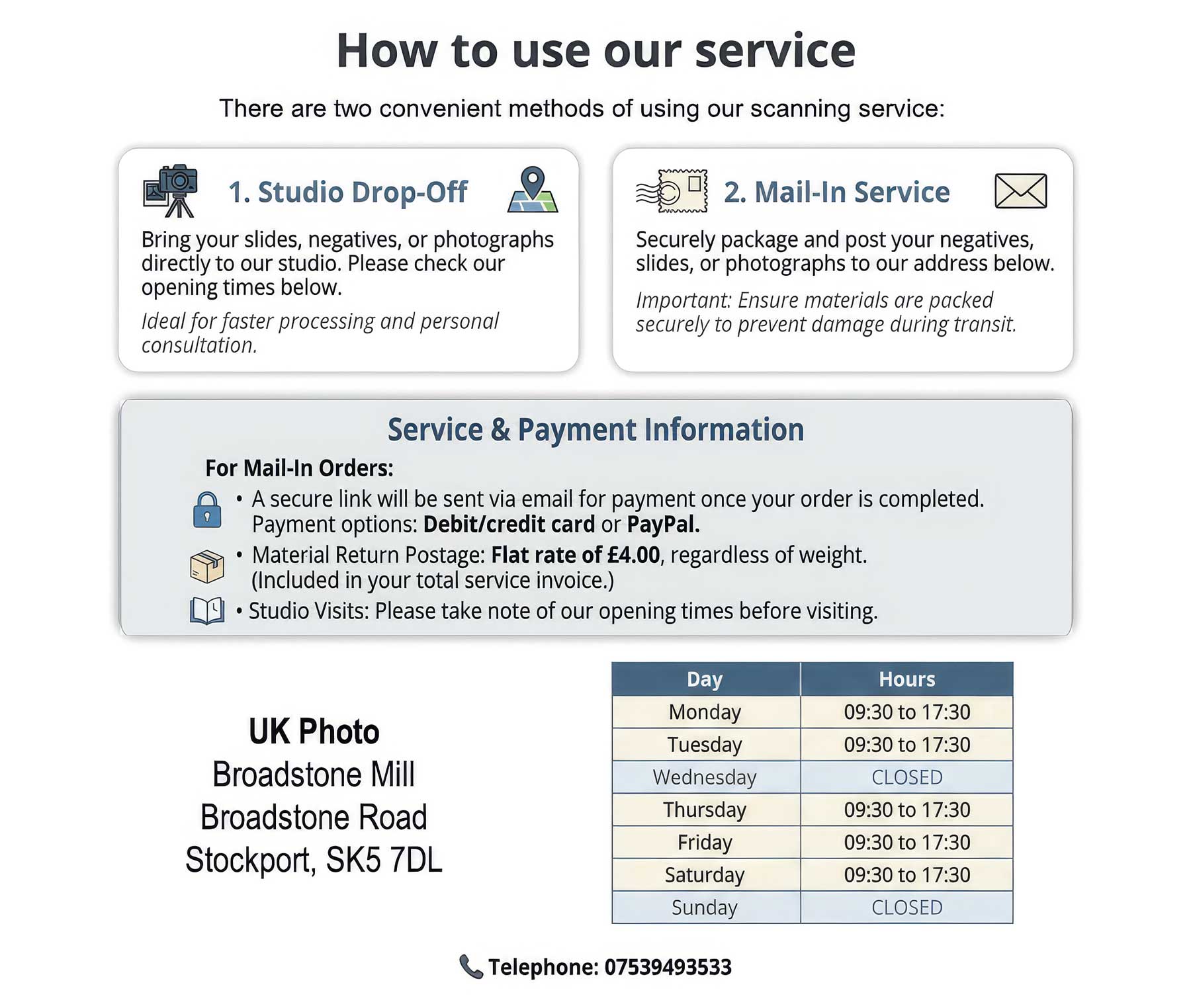
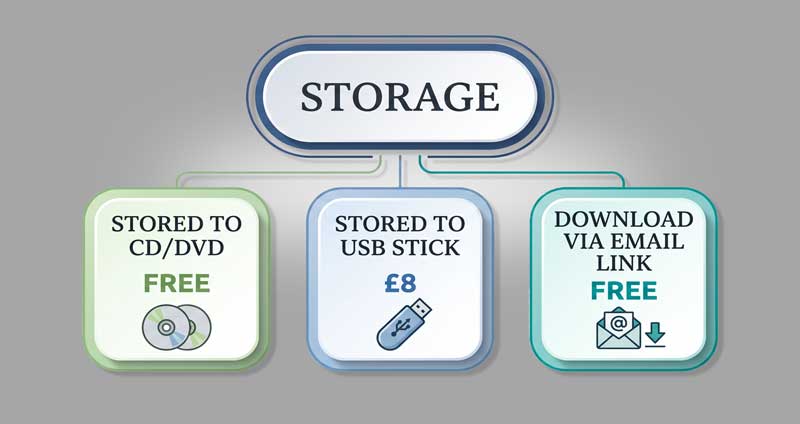
Glass Plate Scanning Inquiries
If you have any questions regarding our scanning service, please enter them in the box above.
Enter either your email address or telephone number depending upon how you would like us to contact you.
Potted History of Glass Plate Photography
Glass plate photography defined the look of the mid‑19th to early‑20th century. Once photographers abandoned paper negatives, glass delivered the stability and precision that shaped modern photographic practice.Wet Plate Era (1851–1880s)
Frederick Scott Archer’s collodion wet plate process (1851) transformed photography. A glass plate was coated, sensitised and exposed while still wet — typically within minutes — demanding portable darkrooms and brisk chemistry. Despite the faff, wet plates produced exceptional sharpness, powering Victorian portrait studios, expedition photography and early reportage.Ambrotypes and Tintypes
The ambrotype offered a direct positive on glass, while the tintype used the same chemistry on japanned metal. Both formats were cheap, quick and durable, making them favourites of travelling and street photographers.Dry Plate Breakthrough (1870s–1920s)
Richard Leach Maddox’s gelatin dry plate innovation freed photographers from the tyranny of “wet‑while‑you‑work”. Factory‑made plates were stable, storable and significantly faster, enabling hand-held cameras and more spontaneous photography. Companies such as Ilford and Kodak industrialised production, standardising plate sizes and emulsions.Industrial Adoption
By the turn of the century, glass plates were the backbone of professional practice. Plate cameras, field cameras and early press cameras relied on glass for its rigidity and flatness. Scientific disciplines — astronomy, microscopy, early motion‑picture research — embraced plates for their precision and archival stability.Decline and Legacy
From the 1920s onwards, roll film and sheet film displaced glass in everyday photography. Plates survived longest in scientific work, particularly astronomy, where their dimensional stability remained valuable well into the late 20th century.Glass plate photography leaves a legacy of astonishingly detailed negatives, a crisp visual record of the Victorian and Edwardian world, and the technological foundations of modern photographic emulsions.
UK-Photo, Broadstone Mill, Broadstone Rd, Reddish, Stockport, SK5 7DL • TEL:
07539493533
• eMail: info@uk-photo.com
Our studio/shop is located between Manchester and Stockport. Our studio customers come from across the Northwest of England.
©2026 - Copyright uk-photo.com